The Anatolian Archive
10,000 Years of Civilization
A land that has been the stage for humanity's greatest empires, most transformative ideas, and enduring legacies.
Timeline
Epochs of Empire
Navigate through the four great eras that shaped modern Turkey.
10,000 BCE – 330 CE
Cradle of Civilization
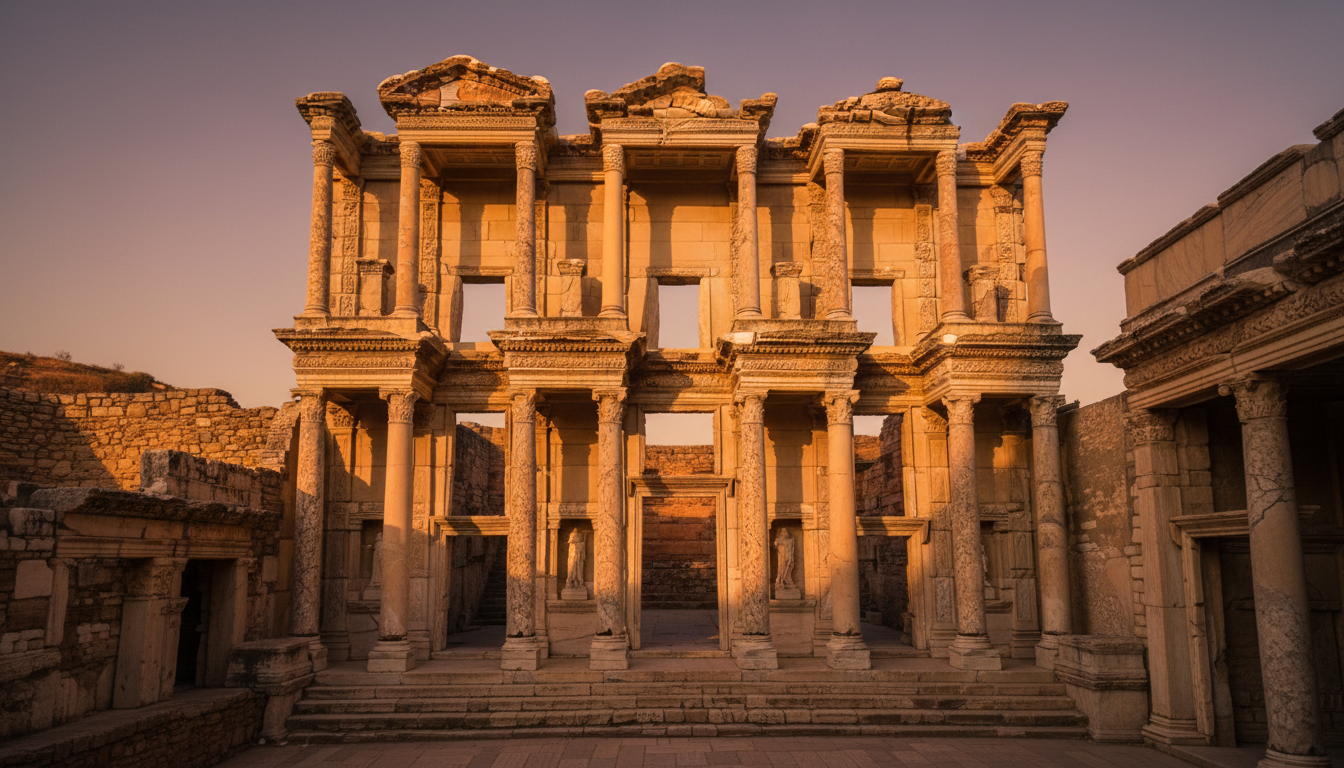
From the Neolithic settlement of Çatalhöyük — one of humanity's first cities — to the legendary Troy, the Hittite Empire, and the Ionian Greeks. Anatolia witnessed the birth of coinage in Lydia, the grandeur of Pergamon, and the might of the Roman province of Asia.
- Çatalhöyük (7500 BCE)
- Troy & the Trojan War
- Hittite Empire
- Kingdom of Lydia
- Ephesus & Pergamon
330 – 1453 CE
The Eastern Roman Empire
Constantinople became the jewel of the world — a city of a million souls guarded by impenetrable walls. For over a millennium, the Byzantine Empire preserved classical learning, developed Orthodox Christianity, and created masterpieces like the Hagia Sophia.
- Founding of Constantinople (330)
- Construction of Hagia Sophia (537)
- The Crusades era
- Golden age of art & mosaics
- Fall of Constantinople (1453)
1299 – 1922 CE
A Transcontinental Superpower
From a small Anatolian principality, the Ottoman Empire grew to control three continents. Under sultans like Suleiman the Magnificent, Istanbul became the center of art, architecture, law, and commerce — with the Topkapi Palace as its beating heart.
- Osman I founds the dynasty (1299)
- Conquest of Constantinople (1453)
- Reign of Suleiman the Magnificent
- The Tulip Period
- Ottoman architecture golden age
1923 – Present
The Republic Rises
Mustafa Kemal Atatürk's revolutionary reforms transformed Turkey into a secular, modern republic. Today, Turkey stands as a G20 economy, a NATO ally, and a cultural bridge between East and West — with Istanbul as one of the world's most dynamic megacities.
- Republic declared (1923)
- Atatürk's reforms
- NATO membership (1952)
- EU candidacy
- Istanbul as global cultural capital